
Organopolysilazane (OPSZ) | SIOResin®
What Is Organopolysilazane (OPSZ)?
Organopolysilazane OPSZ is a class of polysilazane polymers containing a silicon–nitrogen (Si–N) backbone together with organic substituents. Compared with inorganic polysilazanes such as perhydropolysilazane PHPS, OPSZ incorporates organic groups such as methyl, vinyl, phenyl, or other functional functionalities into its polymer structure. These organic groups allow OPSZ to achieve a balanced combination of reactivity, flexibility, hydrophobicity, processability, and ceramic conversion capability, making it particularly suitable for high-performance coatings and polymer-derived ceramics.
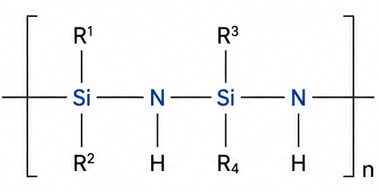
As a professional Organopolysilazane (OPSZ) resins supplier, SIOResin® have developed several Organopolysilazane (OPSZ) systems for different curing conditions, substrates, and performance targets. Our portfolio includes methyl polysilazane for rapid or slow ambient curing, methyl vinyl polysilazane, epoxy-modified polysilazane, acrylic-modified polysilazane, and silicone-modified polysilazane. This range allows us to select the chemistry according to the application rather than forcing every customer into a single polysilazane formulation.
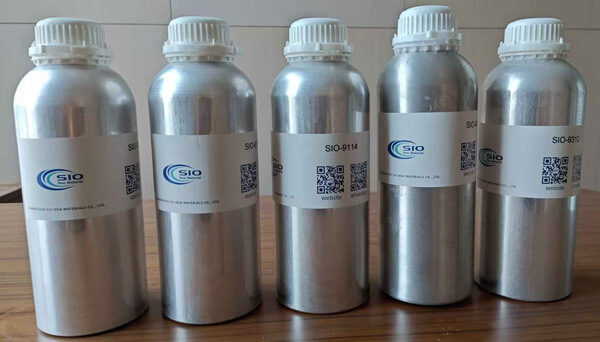
In this guide, we explain what Organopolysilazane (OPSZ) is, how its molecular structure determines performance, how it cures in air and at high temperature, how it differs from PHPS and silicone resin, and how we select an appropriate OPSZ system for a specific coating or material application.
Organopolysilazane Structure
The Si–N Backbone
The fundamental feature of polysilazanes is the presence of silicon–nitrogen bonds. A simplified OPSZ structure can be represented as:
–Si–N–Si–N–Si–
Organic groups are attached to the silicon atoms. Depending on the molecular design, these groups may include methyl, hydrogen, vinyl, phenyl, or other functional structures.
For a methyl polysilazane, for example, the silicon environment can contain both Si–CH3 and Si–H functionalities.
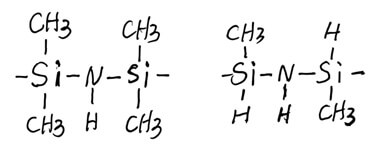
This combination is particularly useful for ambient-curing coatings. The Si–N framework provides high inorganic character, while the methyl groups help moderate the material's reactivity and improve surface properties.
The exact molecular structure of a commercial OPSZ is more complicated than a simple repeating formula. Molecular weight, branching, functional-group distribution, Si–H content, organic-group content, and molecular architecture all influence the final coating. That is why two products can both be called "methyl polysilazane" yet behave quite differently during application.
Key Properties of Organopolysilazane (OPSZ)
The performance of OPSZ does not come from one magical property. It comes from the interaction between its Si–N backbone, organic substituents, molecular architecture, and curing chemistry. We typically look at five properties when evaluating an OPSZ system: hardness, adhesion, hydrophobicity, chemical resistance, and thermal stability.
- Hardness:
The highly crosslinked inorganic-rich network formed during curing can produce very hard surfaces (5~9H). Hardness, however, should never be considered independently. A coating that is extremely hard but cannot tolerate substrate movement may fail earlier than a slightly softer coating with better toughness. That is one reason we developed modified OPSZ grades rather than pursuing maximum hardness in every product. - Hydrophobicity:
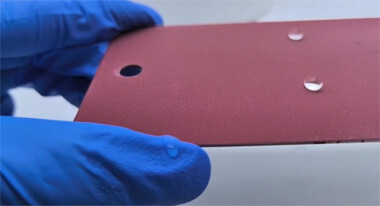
Methyl-containing OPSZ systems can provide low surface energy and strong water repellency. Water contact angle of approximately 110°. This property is useful for surfaces where water, dirt, oil, or stains create a practical problem. - Chemical Resistance:
The inorganic-rich crosslinked structure can provide strong resistance to many chemicals and environmental contaminants. This makes OPSZ attractive for protective coatings exposed to water, oils, cleaning agents, outdoor contamination, and other aggressive environments. - Thermal Stability:
OPSZ also occupies an interesting position in high-temperature materials (up to 800°C). Some OPSZ formulations can withstand substantially elevated temperatures after curing, while the polymer itself can serve as a precursor for further ceramic conversion.
Types of Organopolysilazane
"OPSZ" is not one single chemical. It is a family of materials. At SIOResin®, we use structural modification to create different OPSZ products for different performance requirements.
Methyl-Substituted Organopolysilazane
Methyl-substituted organopolysilazanes contain Si–CH3 groups within the polymer structure. They generally offer a good balance of chemical stability, flexibility, hydrophobicity, and processability. These materials are widely considered for protective coatings, surface modification, and polymer-derived ceramic applications.
Phenyl-Substituted Organopolysilazane
Phenyl-substituted organopolysilazanes incorporate phenyl groups into the polymer structure. The aromatic groups can improve thermal stability, rigidity, and resistance to certain chemical environments. These materials are suitable for high-performance coatings and applications requiring enhanced heat resistance and surface durability.
Functionalized Organopolysilazanes
Functionalized organopolysilazanes contain additional reactive groups, such as alkoxy, amino, epoxy, vinyl, or other functional groups, which can be introduced to tailor adhesion, curing, compatibility, or crosslinking behavior. They are particularly useful for developing application-specific coating and composite systems.
Hybrid or Modified Organopolysilazanes
Hybrid organopolysilazanes are chemically modified or combined with other organic or inorganic components to achieve specific performance characteristics. By incorporating different structural units, these materials can provide improved adhesion, flexibility, hardness, moisture resistance, or compatibility with organic resin systems.
Ceramic Conversion: What Happens When OPSZ Cures?
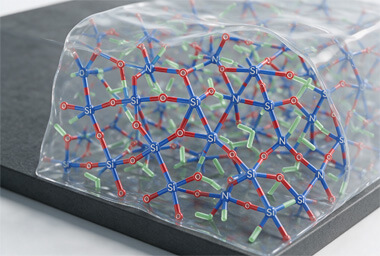
The final structure of an organopolysilazane (OPSZ) depends strongly on the curing atmosphere and temperature. Under ambient air curing, reactive Si–N and Si–H groups undergo hydrolysis, oxidation, condensation, and crosslinking, forming an Si–O–Si-rich inorganic network rather than directly converting into crystalline SiO2.
In contrast, during high-temperature pyrolysis under an inert atmosphere such as nitrogen or argon, oxidation is suppressed and the Si–N backbone undergoes decomposition, rearrangement, and densification. Depending on the polymer structure and carbon content, the resulting ceramic may contain Si3N4-rich and/or SiCN phases.
Therefore, OPSZ can function both as a high-performance coating resin under ambient curing conditions and as a preceramic polymer for SiCN/Si3N4-containing ceramics under high-temperature inert-atmosphere pyrolysis.
SIOResin® Featured Organopolysilazane (OPSZ) Products
At SIOResin®, we do not treat OPSZ as a single universal product. We developed several grades because customers rarely have identical requirements.
SIO-9233 — Fast-Curing Methyl Polysilazane
SIO-9233 is a low-viscosity methyl polysilazane designed for room-temperature self-curing as well as thermal curing. We developed it for applications where customers want rapid hardness development, high surface hardness, hydrophobicity, adhesion, and a relatively simple single-component coating process.
Under our published test conditions, SIO-9233 reaches 6H pencil hardness at 12 hours and 8H at 24 hours, with Grade 0 cross-cut adhesion and a 110° water contact angle. It is a strong candidate for customers looking for a rapid-curing methyl polysilazane similar in application concept to commercial rapid-cure MH-PSZ systems.
Price: USD $120.00/KG Download TDS File

SIO-9219 — Slow-Curing Methyl Polysilazane
SIO-9219 is our slower-curing methyl polysilazane grade. We developed this product for situations where a rapid reaction is not necessarily an advantage. Large-area coating, spraying, leveling, complex geometries, and production processes can benefit from a longer working window.
In practical coating development, "faster" does not always mean "better." A coating that cures too rapidly can lose flow before the film has leveled. By adjusting the curing profile, we can help customers obtain a more uniform surface and better process control. SIO-9219 is therefore a suitable choice for customers seeking a slow-curing methyl polysilazane similar in application concept to commercial slow-cure MH-PSZ systems.
Price: USD $120.00/KG Download TDS File
SIO-9312 — Methyl Vinyl Polysilazane
SIO-9312 Methyl Vinyl Polysilazane introduces vinyl functionality into the OPSZ structure. This gives us a reactive platform for addition chemistry and resin modification. According to our TDS, SIO-9312 can be used with unsaturated resins such as polybutadiene and unsaturated polyester, while its Si–N functionality also provides opportunities for interaction with hydroxyl-containing resin systems.
The product is particularly interesting when the customer needs to combine polysilazane chemistry with another polymer network rather than use OPSZ as a standalone coating resin.
Price: USD $120.00/KG Download TDS File
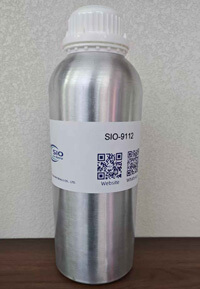
SIO-9112 Epoxy-Modified Polysilazane
SIO-9112 Epoxy-Modified Polysilazane combines polysilazane chemistry with epoxy resin technology. We developed this approach because epoxy systems remain extremely valuable for adhesion, mechanical strength, and heavy-duty protection. By introducing polysilazane into the system, we can move beyond the performance envelope of a conventional epoxy formulation.
Our published data report pencil hardness of 6H+, Grade 0 cross-cut adhesion, a water contact angle of at least 105°, and continuous temperature resistance up to approximately 300°C with short-term higher-temperature resistance depending on the application.
SIO-9112 is therefore worth evaluating when a customer wants strong adhesion and mechanical protection without giving up the high-temperature and surface-performance advantages associated with polysilazane chemistry.
Price: USD $120.00/KG Download TDS File
SIO-9116 — Acrylic-Modified Polysilazane
SIO-9116 Acrylic-Modified Polysilazane is designed for customers who need better compatibility between polysilazane chemistry and acrylic resin systems. Acrylic modification allows us to target applications where conventional acrylic processing, appearance, or compatibility matters, while the polysilazane component introduces additional inorganic character and performance.
This type of modification is particularly useful when the customer already has an acrylic coating platform and wants to improve surface hardness, chemical resistance, weatherability, or other functional properties without completely rebuilding the formulation from scratch.
For this product, we recommend evaluating the final coating on the actual substrate because acrylic compatibility, crosslink density, pigment loading, and curing conditions can strongly influence the final result.
Price: USD $120.00/KG Download TDS File
Organopolysilazane Applications
OPSZ becomes particularly valuable when a customer needs several properties at the same time. A coating may need to be hard but not brittle. It may need to repel water while adhering strongly to metal. It may need to cure at room temperature but withstand elevated temperatures in service. That combination is where OPSZ becomes interesting.
Automotive Protective Coatings
Automotive surfaces face UV exposure, water, detergents, road contaminants, chemicals, abrasion, and repeated cleaning. OPSZ can form a highly crosslinked protective surface while maintaining low surface energy. This makes it suitable for applications such as clear protective coatings, anti-graffiti surfaces, wheel coatings, trim protection, and other high-performance automotive finishes.

Metal Protection and Anti-Corrosion Coatings
Corrosion begins at the interface between a metal and its environment.A dense coating reduces the transport of water, oxygen, ions, and contaminants toward the substrate. OPSZ is attractive here because the cured film combines high crosslink density with chemical resistance and hydrophobicity
For more demanding metal systems, we can also use modified OPSZ chemistry. The goal is not simply to maximize hardness. We focus on adhesion, flexibility, substrate compatibility, and long-term barrier performance together.
Glass and Anti-Fouling Surfaces
Glass is chemically stable but can easily become contaminated by water spots, fingerprints, oils, and environmental deposits. An OPSZ coating can lower surface energy and create a smooth protective interface. This can improve water repellency and stain resistance while maintaining optical clarity when the formulation and film thickness are properly controlled.
High-Temperature Protection
OPSZ also provides a route toward high-temperature coatings (≥600°C).For applications that require ceramic conversion rather than simply polymeric heat resistance, we can move toward high-temperature pyrolysis and ceramic-forming systems. That is an entirely different design target from a conventional heat-resistant organic coating.
PHPS vs OPSZ: Which One Should We Choose?
The difference between perhydropolysilazane PHPS and OPSZ is not simply a question of which material is "better." We select between them according to the intended chemistry and application.
PHPS has a higher inorganic character and is particularly attractive when high-purity oxide formation or non-oxide ceramic conversion is the primary objective.
OPSZ introduces organic functionality to improve processability, flexibility, hydrophobicity, compatibility, and application performance.
For ambient protective coatings, we often favor OPSZ because a coating must survive more than a hardness test. It must wet the substrate, form a continuous film, tolerate thermal and mechanical stress, and maintain adhesion over time.
For high-temperature ceramic precursor applications, the choice depends on the target ceramic phase. PHPS is a logical starting point when a high-purity Si–N-derived ceramic is required. Carbon-containing OPSZ becomes particularly interesting when SiCN-containing ceramic structures are desired.
The key question is therefore not: "Is PHPS better than OPSZ?" It is: "What molecular architecture and conversion pathway does this application require?"
OPSZ vs Silicone Resin
This comparison deserves special attention because both materials can ultimately produce coatings containing Si–O–Si networks after appropriate curing. So why use OPSZ instead of conventional silicone resin?
The answer starts with the precursor. A conventional silicone resin already has a Si–O–Si backbone. Curing mainly increases its crosslink density or completes condensation/addition reactions. OPSZ starts from a Si–N-containing polymer. During ambient curing, the Si–N-containing precursor undergoes hydrolysis, oxidation, and condensation, progressively developing an inorganic-rich Si–O-containing network. This gives the two materials different chemical histories.
There is another major difference.A silicone resin generally remains a silicone polymer after curing. OPSZ retains a further transformation pathway. Under suitable high-temperature conditions, the precursor can undergo polymer-to-ceramic conversion. That gives OPSZ an additional materials-processing dimension that ordinary silicone resin does not possess in the same way.
However, this does not mean OPSZ should replace silicone resin in every application. Silicone resins remain excellent materials for heat resistance, weatherability, electrical insulation, flexibility, and cost-effective industrial coatings. SIOResin itself supplies a broad range of silicone resin technologies for these applications.
We therefore select OPSZ when the customer needs the particular combination of high crosslink density, inorganic-rich surface chemistry, strong hardness, hydrophobicity, chemical resistance, and ceramic-precursor capability.
Frequently Asked Questions About Organopolysilazane (OPSZ)
1. Is Organopolysilazane the same as Polysilazane?
No. Polysilazane is the broader material family. Organopolysilazane, or OPSZ, refers to polysilazanes containing organic substituents. PHPS and OPSZ therefore belong to the same broader polysilazane family but have different molecular designs.
2. Does OPSZ become Si3N4 when it cures at room temperature?
No. Under normal ambient curing, water and oxygen participate in the transformation. The resulting coating is primarily an inorganic-rich, Si–O–Si-containing network. Formation of Si3N4 requires substantially different high-temperature processing conditions and an oxygen-free or controlled atmosphere.
3. Is PHPS harder than OPSZ?
Not necessarily. PHPS has a higher inorganic character, but actual coating hardness depends on molecular structure, curing, crosslink density, film thickness, additives, and substrate. A well-designed OPSZ formulation can deliver very high hardness while offering better flexibility and application performance. For example, our SIO-9233 reaches up to 8H pencil hardness after 24 hours under the specified test conditions.
4. Is OPSZ better than silicone resin?
Not universally. OPSZ offers a different performance profile. We normally recommend it when the customer specifically needs high hardness, dense inorganic-rich networks, strong chemical resistance, hydrophobicity, or ceramic conversion potential.
5. Why is OPSZ more expensive than ordinary silicone resin?
OPSZ requires more specialized polymer chemistry and tighter control of reactive functional groups and molecular structure. More importantly, the customer is not buying only a conventional film-forming resin. The value comes from the combination of: Si–N chemistry + controlled curing + inorganic network formation + high-performance surface properties + ceramic precursor capability. The right comparison is therefore not simply price per kilogram. It is performance per coated surface and the service life that the coating can deliver.
6. Is OPSZ better than silicone resin?
Yes, depending on the grade. Some OPSZ products are designed as direct film-forming coating resins. Others are better suited as reactive components or modifiers for epoxy, acrylic, silicone, rubber, or other polymer systems.
7. Can OPSZ be applied to plastic?
Some grades can.The answer depends strongly on the plastic, surface energy, pretreatment, coating chemistry, and curing temperature.
8. Why We Develop OPSZ as a Family of Materials
We believe the future of high-performance coatings does not belong to a single "universal resin". Different substrates move differently. Different factories have different curing equipment. Some customers need one-component room-temperature curing. Others can bake at 250°C or higher. Some need maximum hardness. Others need flexibility. Some need hydrophobicity. Others need ceramic conversion.
OPSZ gives us a molecular platform that can address these different requirements. That is why our development strategy includes methyl polysilazane, methyl vinyl polysilazane, epoxy-modified polysilazane, acrylic-modified polysilazane, and silicone-modified polysilazane rather than relying on one formulation.
Our objective is simple: use molecular design to solve the customer's actual coating problem.
About SIOResin
SIOResin(Guangzhou SIO New Material) is a leading manufacture specializing in developping sustainable products and technologies in new material field. We provide professional solutions regarding water-based polyurethane, water-based acrylic resin, water-based UV-curing resin, silicone resin, polyethylenimine (PEI), polysilazane resin, additives and curing Agents etc., which have been widely applied in various industries, such as coatings, cosmetics, textiles, biology, automotive and other high-tech industries.
Please feel free to contact us via Email sales@sioresin.com if you would like to learn more about our products or request samples!